Lead Forward Deployed Engineer at Eliza · San Francisco

I’m Teja. I help teams turn difficult business problems into AI systems people actually use.

At Eliza I set technical direction on customer engagements, build alongside our forward deployed engineers, and help them through the decisions that decide whether a system gets used. Before that I spent three years at EY building multimodal search and agentic retrieval systems for media, energy and financial-services clients.

What I do at Eliza

Eliza embeds forward deployed engineers inside companies to build production AI systems — and to leave the team able to run and extend them. My job is to make sure what we build is technically sound, fits how the customer actually works, and makes our engineers better along the way.

The problems

Usually a workflow that eats expert time: people searching across documents and systems, reconciling data by hand, or answering the same questions again and again. The work is finding the part AI should do — and being clear about the part it shouldn’t.

Decisions I work on

  • Which parts need retrieval, which need an agent with tools, and which should just be ordinary code.
  • How the system gets its context: ingestion, permissions, search quality.
  • What “good enough” means before we build — evaluation sets, relevance metrics, acceptance thresholds.
  • What we are not building yet, and saying so early.

Helping FDEs grow

I pair on the hardest part of a build, review designs before they harden, and raise risks early with a recommendation attached. When something works twice, we write it down as a playbook or a reusable building block, so the next team starts further ahead.

Eliza’s customer work is confidential. I’ll add public stories here as they’re approved.

Three systems from my time at EY

In EY’s AI & Data practice I led small engineering teams building retrieval and multimodal systems for clients in media, energy and financial services. Client names stay private; the engineering doesn’t have to.

Multimodal AI · Media & entertainment

Scene-level search for video libraries

A media library is searchable only by what someone typed into its metadata. We made the footage itself searchable — by what’s on screen and what’s said — and used that to drive new content.

My part
Retrieval architecture combining video understanding, audio parsing and metadata enrichment, and the agents built on top for highlights, summary podcasts and articles.
The hard part
Lining up three kinds of signal on one timeline, so a search returns the right scene rather than the right file.
Read the full story: scene-level search for video libraries
How a clip becomes searchable
Video library
Scenes & shotsvideo understanding
Speech & soundaudio parsing
Titles, people, tagsmetadata enrichment
One scene-level index
Search“the goal in the second half”
Content agentshighlights, podcasts, articles

Sketch of the approach, not a client system.

One question, answered with sources
A question
Agent loopreason · choose a tool · read the result · repeat
Document searchtuned BGE embeddings + reranker
Company APIsstructured data the documents don’t hold
Guardrailsscope, grounding, when to refuse
Answer with citations

Sketch of the approach, not a client system.
Agentic retrieval · Energy

An agent that answers from the company’s own documents

The goal was to take routine questions off subject-matter experts’ plates by giving people an assistant that searches, checks and cites the company’s own material.

My part
Ingestion pipelines and the search layer over unstructured, semi-structured and API data; ReAct-style tool use with guardrails; embedding tuning and reranking.
The hard part
Retrieval quality. An agent is only as good as the context it pulls, so most of the effort went into what gets indexed and how results are ranked.

Video AI · Alliance work with NVIDIA

Reusable starting points on NVIDIA’s video search blueprint

I adapted NVIDIA’s Video Search and Summarization (VSS) blueprint into repeatable starting points for client pursuits, so a team could show a working system in a new domain rather than a slide about one.

  • Sports highlights
  • Corporate security alerting
  • Broadcast moderation for sensitive content

A bit about me

I studied at IIT Madras, then started my career at EY in New Delhi, advising governments in India and Cambodia on public health and agriculture programs. I moved into analytics at American Express, did a master’s in Computational Data Science at Georgia Tech, and spent short stints at Goldman Sachs and PlayerZero before returning to EY to build AI systems.

Eliza is where those threads meet: technical work, done close to the people who’ll use it. I speak Telugu, Hindi and English, get by in Tamil, and have beginner French and Chinese.

Teja smiling on a hilltop, with the bay and a city skyline behind him

Experience

2026 – now

Lead Forward Deployed Engineer

Eliza, San Francisco

Technical direction and hands-on engineering on customer AI deployments; coaching FDEs.

2023 – 2026

Lead AI Engineer, AI & Data

EY, San Francisco

Agentic retrieval, multimodal media search and enterprise Q&A across media, energy, financial services, retail and manufacturing. Led teams of 4–8 engineers from MVP through UAT.

2022 – 2023

Senior Data Scientist

EY, San Francisco

Time-series forecasting, ranking models and applied NLP for manufacturing and retail clients.

Earlier

  • PlayerZero, product data science, 2022 — NLP-based bug triage and session analysis.
  • Goldman Sachs, data science in risk, 2021 — consumer credit strategy for GreenSky’s medical financing.
  • American Express, paid-search analytics, 2018 – 2020 — experimentation and automation across European markets.
  • EY, public-sector consulting, 2017 – 2018 — health and agriculture programs in India and Cambodia.

Georgia Tech — MS, Computational Data Science

IIT Madras — Bachelor’s degree

NVIDIA — Certified Associate, Generative AI LLMs

Things I keep relearning

Passing UAT is not adoption.

A system can clear every acceptance test and still go unused. Before we build, I want to know who opens it on an ordinary Tuesday, and why.

Check the context before blaming the model.

Most bad answers I’ve debugged came from the wrong context, not the wrong model. Better embeddings and a reranker are often cheaper than a bigger LLM.

Write it down the second time.

The first time is a project. The second time is a pattern — worth a template, so the next team doesn’t start from zero.

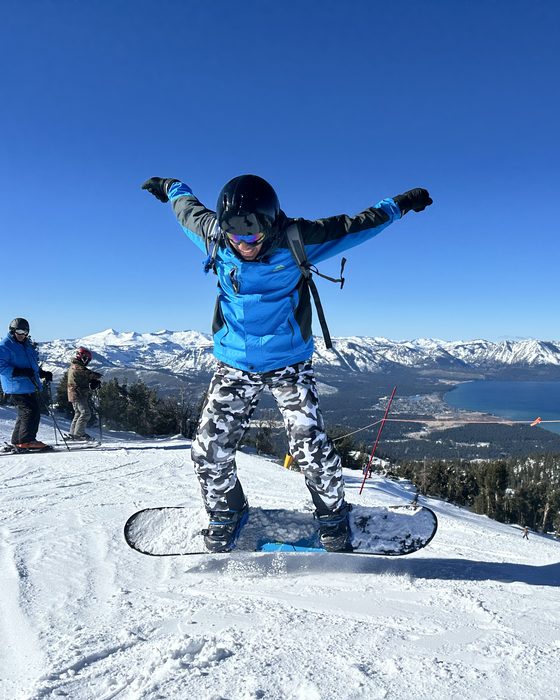
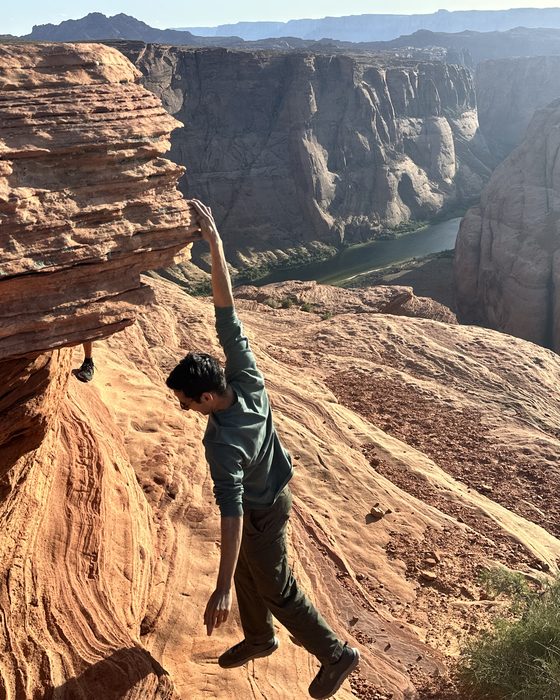
Climbing, snowboarding, chess, Dota 2

Outside work I climb, snowboard, play chess and play Dota 2. They have one thing in common: you read the whole position before you commit.

Teja hanging one-handed from a sandstone overhang above a river canyon
Climbing
Teja on a snowboard with arms out, above a lake and snowy mountains
Snowboarding

A small puzzle

White to move and mate in one.

Get in touch

Email is the best way to reach me. I’m glad to talk about putting AI into real workflows, forward deployed engineering, or a good chess game.